
A well-built Shed Base is the starting point of any shed that stands firm, stays level, and lasts for years. Many people focus on the shed itself and overlook the base, but most shed problems begin underneath. Uneven doors, cracked floors, and water damage are often the result of a poorly prepared foundation rather than […]
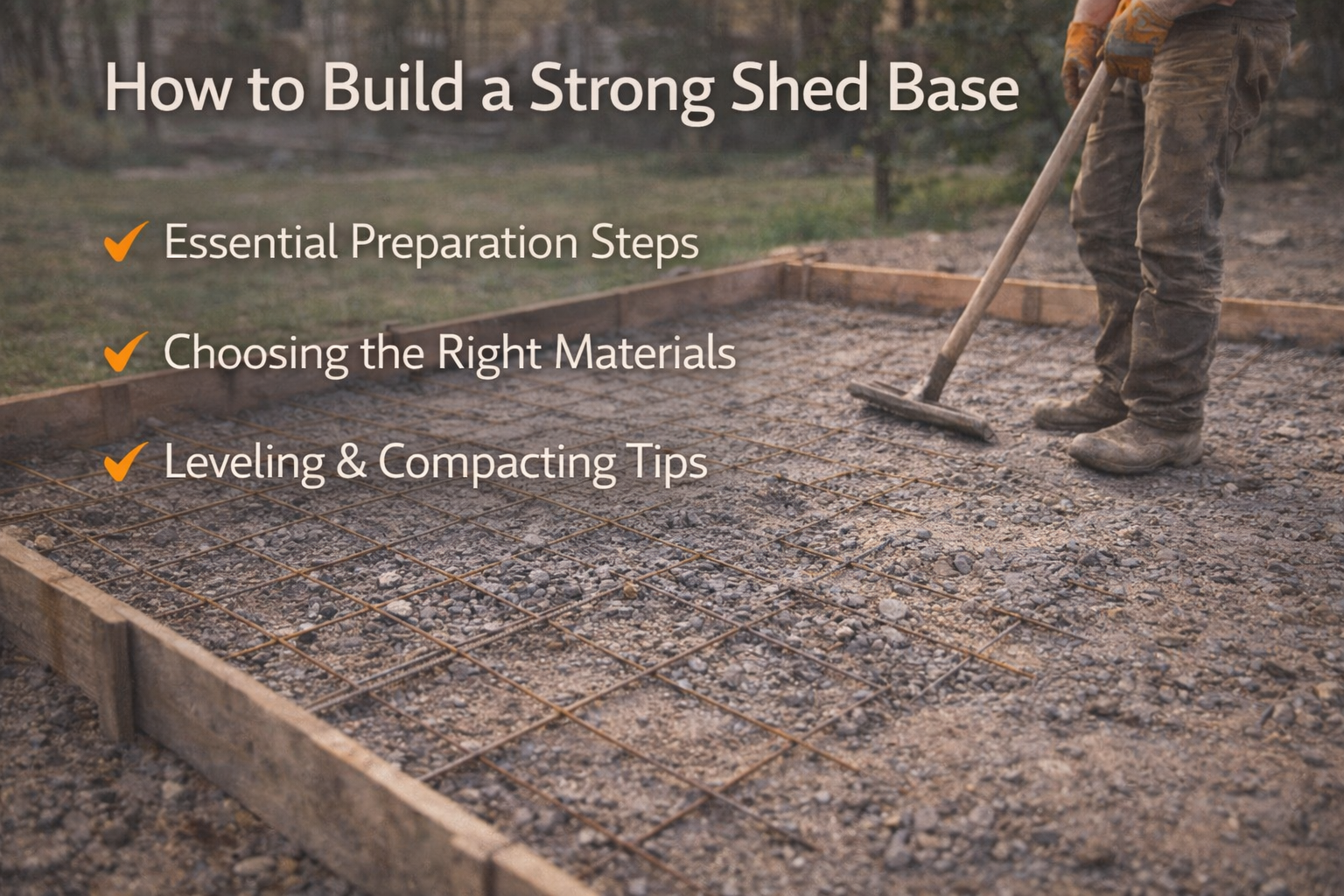
A well-built Shed Base is the starting point of any shed that stands firm, stays level, and lasts for years. Many people focus on the shed itself and overlook the base, but most shed problems begin underneath. Uneven doors, cracked floors, and water damage are often the result of a poorly prepared foundation rather than a faulty shed.
Taking the time to build a strong shed base helps protect your investment and makes everyday use far easier. Whether you are planning a small garden shed, a storage unit, or a workshop, the base needs to support weight, resist moisture, and cope with changing weather conditions. This guide walks you through everything you need to know, from planning and preparation to pouring concrete correctly, so you can build with confidence and avoid common mistakes.
A shed base does more than just hold weight. It keeps the shed level, protects it from ground moisture, and prevents movement over time.
Without a proper base, sheds can sink unevenly, especially during wet seasons. This can cause structural stress, water damage, and reduced lifespan. A strong shed base spreads the load evenly and creates a stable platform that supports the shed for years.
Before building the shed base, location matters; choose a flat area with good drainage. Avoid low spots where water collects after rain.
If the ground is uneven, it is better to level it properly rather than trying to compensate later. A well-prepared site makes the rest of the work easier and improves the final result.
Also consider access. If you plan to use concrete, the area should be reachable for delivery or pumping equipment.
There are several shed base options, but concrete remains the most durable and reliable for long-term use.
A concrete shed base is the strongest and most popular option. It provides excellent load-bearing capacity and resists moisture and movement.
This type of base is ideal for large sheds, workshops, and sheds that will store heavy equipment. When poured correctly, a concrete base can last decades with minimal maintenance.
Paving slabs can work for smaller sheds. They are easier to install but rely heavily on proper ground preparation. Poor compaction underneath can lead to movement over time.
Timber bases are quicker to install but are more vulnerable to moisture and rot. They are better suited for temporary sheds or very light use.
For most long-term projects, a concrete shed base is the most reliable choice.
Measure the shed footprint and add extra space around the edges. This helps protect the shed walls and improves stability.
Use stakes and string to mark out the area clearly.
Dig down to remove grass, topsoil, and soft ground. The depth usually ranges from 150mm to 200mm, depending on ground conditions.
Ensure the base of the excavation is level and compacted.
Lay a layer of hardcore or crushed stone and compact it firmly. This layer improves drainage and prevents the concrete from shifting over time.
Use timber boards to create a frame around the base. This holds the concrete in place and ensures clean edges.
Check that the formwork is level on all sides.
This is where quality matters most. The concrete should be evenly poured and properly compacted to remove air pockets.
For sites with limited access or larger bases, professional concrete pumping can make the process cleaner and more precise. Quick Concrete Pumping often supports shed base projects by ensuring concrete is placed efficiently, even in tight garden spaces.
Our experience helps avoid uneven pours and reduces manual labour during installation.
Use a straight edge to level the surface. Once finished, allow the concrete to cure properly. Avoid placing the shed on the base until the concrete has fully set.
Skipping proper ground preparation is a major mistake. Another is pouring concrete too thin, which can crack under load.
Poor drainage around the base can also cause long-term problems. Taking time to plan and using the right materials prevents these issues entirely.
Building a strong Shed Base is not just about pouring concrete. It is about careful planning, proper preparation, and making sure every layer beneath the shed works together to provide long-term support. When done correctly, a solid base keeps your shed level, protects it from moisture, and prevents future repair costs that often arise from shortcuts.
If you are preparing to build a shed base and want to ensure the concrete is placed efficiently and accurately, it is worth learning more about professional concrete pumping support. Quick Concrete Pumping brings experience, reliable equipment, and practical knowledge to projects of all sizes, helping shed bases turn out strong, clean, and built to last. Exploring our guidance and services can help you complete your project with confidence and peace of mind.
