
If you have ever walked on a floor that feels uneven, dips in certain areas, or causes tiles to crack over time, the problem usually starts beneath the surface. Before any flooring goes down, the base needs to be flat, stable, and properly prepared. That is exactly where Self Levelling Compound comes in. Whether you […]
If you have ever walked on a floor that feels uneven, dips in certain areas, or causes tiles to crack over time, the problem usually starts beneath the surface. Before any flooring goes down, the base needs to be flat, stable, and properly prepared. That is exactly where Self Levelling Compound comes in.
Whether you are renovating a home, working on a commercial space, or handling a new build in the UK, understanding how and when to use self-levelling compound can save you time, money, and a lot of frustration.
In this guide, we will break it down in simple terms. You will learn what it is, where it works best, and how to use it correctly for long-lasting results.
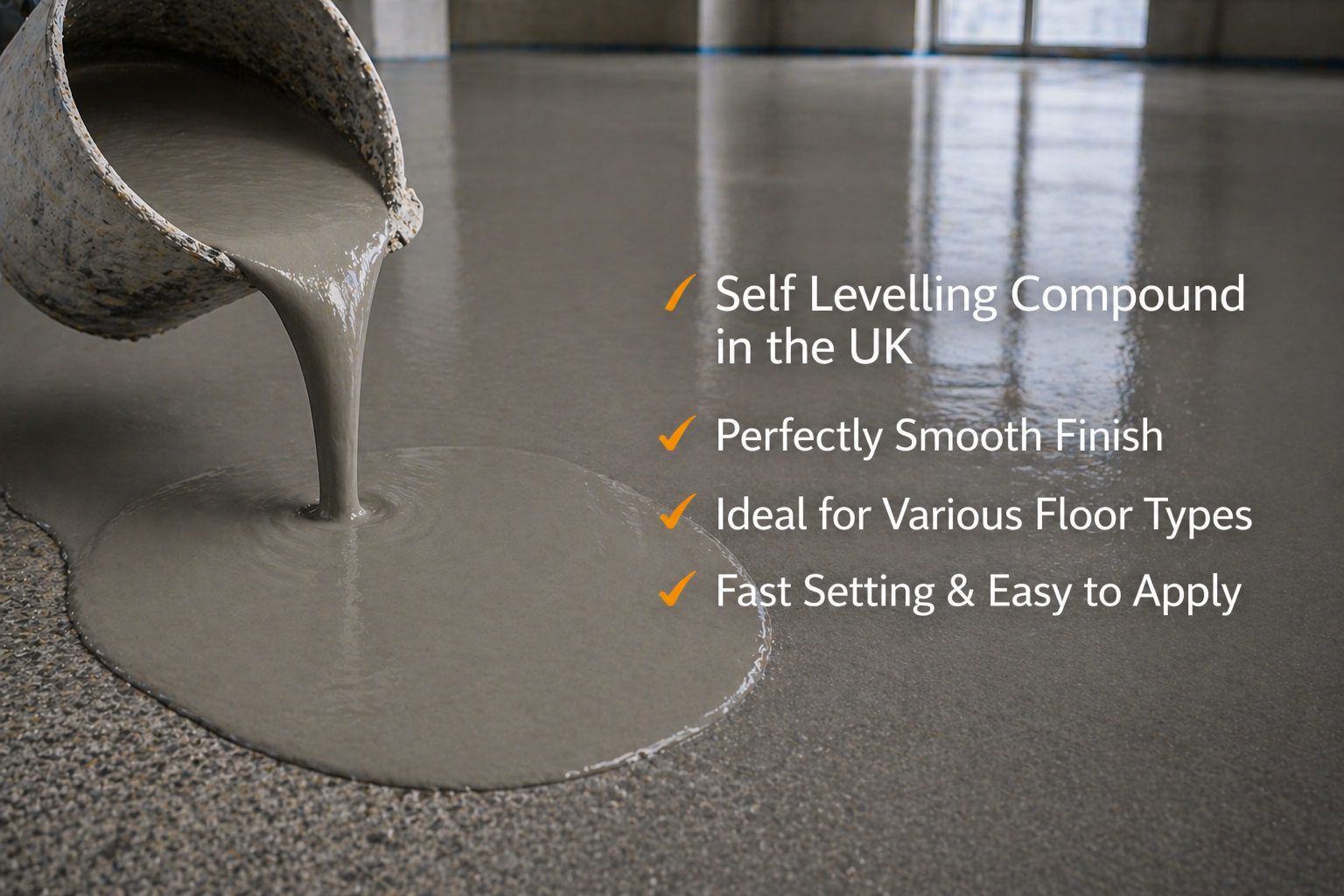
Self-levelling compound is a cement-based mixture designed to create a smooth, flat surface on floors. Once mixed with water, it flows easily and spreads across the surface, filling low spots and evening out imperfections.
Unlike traditional concrete or screed, it requires minimal manual effort to level. Gravity does most of the work.
It is commonly used before installing:
Think of it as the finishing layer that ensures your floor looks and performs exactly as it should.
Skipping proper floor preparation is one of the most common mistakes in construction and renovation.
Using a self-levelling compound helps to:
Even a small uneven area can lead to bigger problems later, especially in high-traffic spaces.
Knowing when to use it is just as important as knowing what it is.
If the existing floor is uneven, applying a levelling compound ensures a smooth base for installation.
Old adhesive, damaged screed, or worn concrete often leaves behind an uneven surface that needs correction.
It works well for filling dips, cracks, and low spots without replacing the entire floor.
Older UK properties often have uneven subfloors. Self-levelling compound helps modernise them without major structural work.
Not all compounds are the same. Choosing the right type depends on your project.
Suitable for most indoor floors with minor to moderate unevenness.
Designed for commercial or industrial areas where higher strength is required.
Ideal for projects with tight timelines. Some can be ready for flooring within 24 hours.
Using self-levelling compound for wood requires extra care because wood surfaces behave differently from concrete.
Wood can expand, contract, and flex, so preparation is key.
Never apply a standard compound directly onto untreated wood. It may crack or fail over time.
Getting a good finish depends on using the right tools.
A self-levelling compound Roller, often called a spiked roller, is used to:
Skipping this step can leave imperfections in the surface.
Here is a simple step-by-step process used by professionals:
Clean the floor thoroughly. Remove dust, grease, and loose debris.
Priming improves adhesion and prevents rapid drying.
Follow manufacturer instructions carefully. Consistency matters.
Pour the mix onto the floor and spread it evenly using a trowel or rake.
Run a spiked roller over the surface to remove air and improve flow.
Drying time varies depending on the product, but avoid foot traffic until fully set.
Even though self-levelling compound is designed to be easy to use, mistakes can still happen.
These errors can affect both the appearance and performance of the floor.
People often confuse levelling compound with screed, but they serve different purposes.
For larger projects, both may be used together.
Companies like Quick Concrete Pumping provide professional floor screed services that form a solid base before applying levelling compounds. This approach ensures durability and a high-quality finish.
While DIY application works for small areas, larger or more complex projects benefit from expert support.
Quick Concrete Pumping offers:
We work with commercial, trade, and domestic clients across Kent and Surrey.
Our service areas include:
Brighton, Brixton, Bromley, Chiswick, Chelsea and Kensington, Clapham, Crawley, Croydon, Dorking, Ealing, East London in selected areas, Epsom, Guildford, Godalming, Hammersmith and Fulham, Horsham, Islington, Kingston Upon Thames, Leatherhead, Mitcham, Redhill, Reigate, Richmond, Sutton, Streatham, Tooting, Tunbridge Wells, Wandsworth, West London, and Westminster.
Working with experienced professionals helps ensure consistent quality, especially when preparing floors for high-end finishes.
Most products can be applied between 2mm and 10mm, but some specialist compounds allow thicker layers.
Drying time varies, but many products are ready for light foot traffic within 24 hours.
Some products are designed for external use, but always check the specifications before applying.
Yes. Priming improves adhesion and prevents issues like cracking or poor bonding.
Yes, many compounds are compatible and help create an even surface over heating systems.
A smooth, level floor is the foundation of any successful flooring project. Using the right Self Levelling Compound ensures your surface is properly prepared, your flooring lasts longer, and the final result looks professional.
While it is a straightforward process in theory, the details matter. From surface preparation to choosing the right product, each step plays a role in the outcome.
For larger projects or when precision is critical, working with experienced providers like Quick Concrete Pumping can make all the difference. Our expertise in floor screed and concrete solutions helps ensure your base is solid before any levelling work begins.
If you are planning a flooring project and want reliable guidance or support, it is worth exploring professional services from Quick Concrete Pumping to get the best possible result from the start.
