
Concrete is one of the most widely used building materials in the UK. From house foundations and driveways to large commercial developments, it plays a central role in modern construction. Yet, many people do not fully understand how concrete is actually made or what goes into achieving a strong, long-lasting result. If you are planning […]
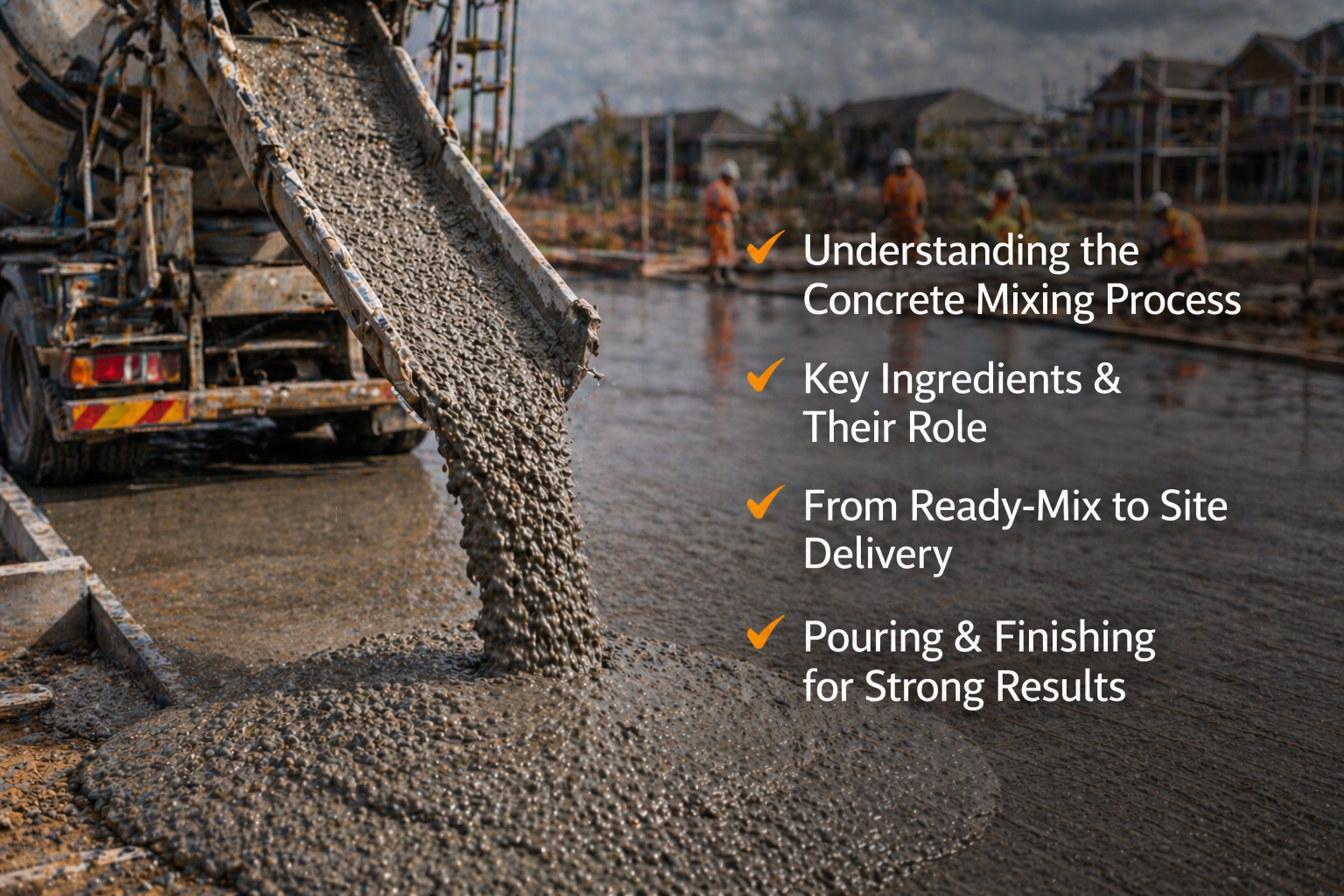
Concrete is one of the most widely used building materials in the UK. From house foundations and driveways to large commercial developments, it plays a central role in modern construction. Yet, many people do not fully understand how concrete is actually made or what goes into achieving a strong, long-lasting result.
If you are planning a project or simply want to understand the process better, this guide walks you through everything. From the raw materials and mixing process to pouring and finishing, you will see how concrete is made in the UK and what really matters at each stage.
At its core, concrete is a mixture of four key ingredients:
Each component plays a specific role:
Getting the balance right is what determines the final strength and durability.
In the UK, raw materials are sourced from quarries and suppliers that meet strict quality standards.
Quality control at this stage is essential. Poor materials lead to weak concrete, no matter how well it is mixed later.
Mixing is where everything comes together. There are two main methods used across the UK.
Ready Mix Concrete is produced in a batching plant and delivered to site in a mixer truck.
This method ensures:
It is widely used for both residential and commercial projects.
In this method, materials are brought to the site and mixed as needed.
It is ideal for:
Experienced providers like Quick Concrete Pumping offer both ready mix and mix-on-site services, ensuring the right solution for each project.
Once mixed, concrete must be transported quickly before it begins to set.
In the UK, this is usually done using:
Concrete pumping is especially useful for:
Quick Concrete Pumping specialises in pump hire services, helping contractors place concrete exactly where it is needed without delays.
Pouring is a critical stage that directly affects the final outcome.
Concrete is typically poured in layers and spread using tools like shovels or rakes.
Concrete begins to set as soon as water reacts with cement. This process is known as hydration. Delays during pouring can lead to weak joints and uneven surfaces.
After pouring, the concrete must be compacted to remove trapped air.
This is usually done using:
Proper compaction ensures:
Skipping this step can result in voids and structural weakness.
Finishing gives concrete its final appearance and texture.
Common finishing techniques include:
Curing is often overlooked, but it is one of the most important steps.
Concrete needs time and moisture to gain strength.
In the UK climate, curing conditions can vary, so proper planning is essential.
The price of concrete in the UK depends on several factors:
On average, ready mix concrete can range from £100 to £150 per cubic metre, though prices vary by region and project size.
Working with experienced suppliers helps ensure you get the right mix without overspending or wasting materials.
Different projects require different types of concrete.
Used for general construction such as paths and driveways.
Includes steel reinforcement for added strength in structural applications.
Designed for heavy-duty commercial and industrial use.
Flows easily without the need for vibration, ideal for complex structures.
Concrete may seem simple, but small mistakes can lead to costly problems.
Issues like poor mixing, incorrect ratios, or improper pouring can result in:
That is why many contractors rely on trusted providers like Quick Concrete Pumping. Our experience ensures that every stage, from mixing to pouring, is handled with precision.
Finding the right supplier is just as important as understanding how concrete is made. The quality of your concrete, delivery reliability, and level of expertise can directly affect the success of your project.
Across the UK, there are several ways to source concrete, depending on your needs.
Local suppliers are often the go-to option for residential and small commercial projects. They provide ready mix concrete delivered directly to your site, saving time and effort.
However, quality and consistency can vary, so it is important to choose a supplier with a strong track record.
Large national companies offer wide coverage and standardised mixes. They are suitable for large-scale projects but may lack flexibility for smaller or custom jobs.
This is often the best option for both domestic and commercial projects. Specialist providers offer more than just concrete. They provide tailored solutions, expert advice, and additional services like pumping and on-site mixing.
When it comes to reliable service, consistent quality, and real expertise, Quick Concrete Pumping stands out as one of the best places to get concrete in the UK.
We offer:
What sets them apart is their ability to handle projects of all sizes while maintaining high standards. Whether you are working on a small driveway or a large construction site, they provide practical solutions that make the job easier and more efficient.
Their coverage across Kent, Surrey, and key areas of London such as Croydon, Bromley, Guildford, and Westminster also makes them highly accessible for a wide range of projects.
Understanding how concrete is made in the UK gives you a clearer picture of what goes into a successful build. From sourcing quality materials to careful mixing, pouring, and curing, each step plays a role in achieving a strong and durable result.
While smaller projects can be handled with basic methods, larger or more complex jobs benefit from professional support. Reliable services ensure consistency, reduce waste, and help avoid costly mistakes.
If you are planning a project and want expert guidance or dependable concrete solutions, it is worth exploring what Quick Concrete Pumping has to offer. Our experience across a wide range of projects makes them a trusted choice for delivering quality concrete from start to finish.
