
Working with cement in cold weather can be frustrating. You pour your mix expecting it to set within a reasonable time, only to find it still soft or slow to harden the next day. If you have ever dealt with this, you are not alone. In the UK, cold temperatures, damp air, and limited sunlight […]
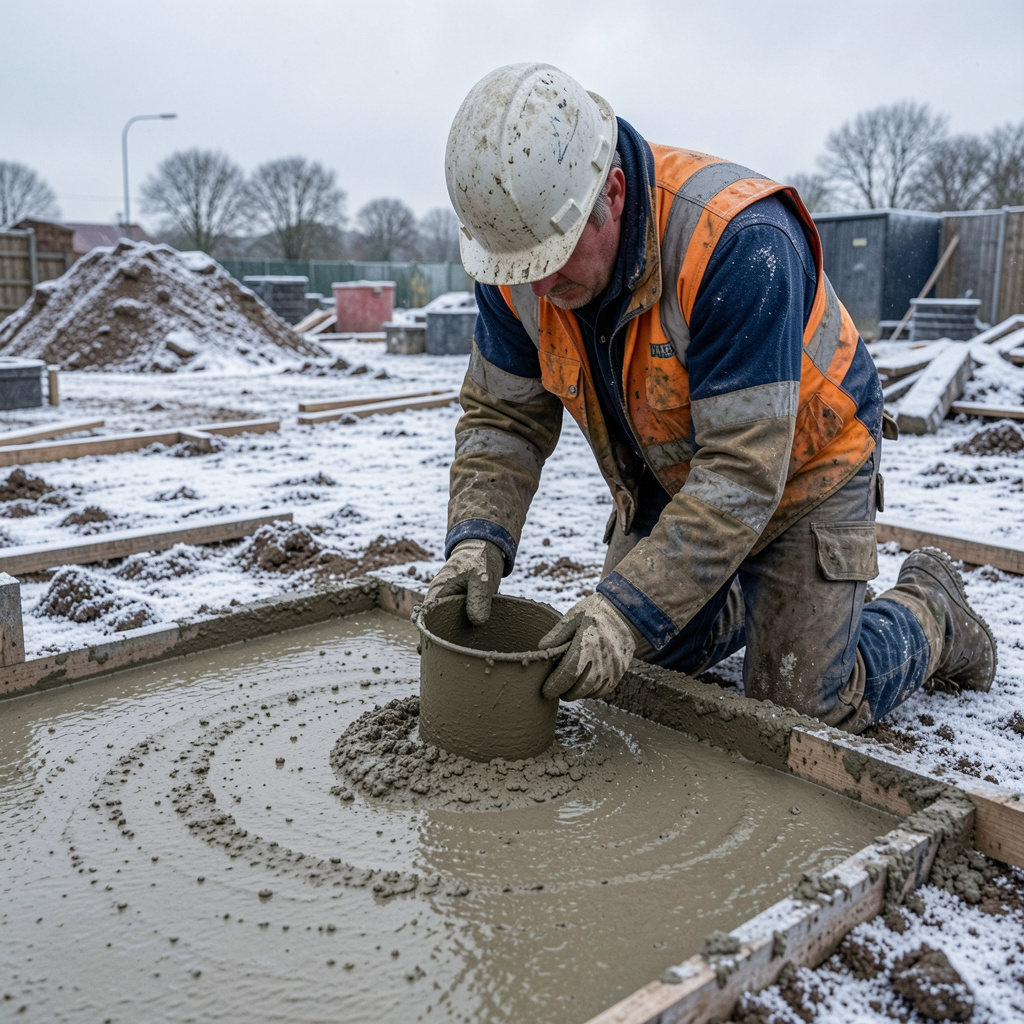
Working with cement in cold weather can be frustrating. You pour your mix expecting it to set within a reasonable time, only to find it still soft or slow to harden the next day. If you have ever dealt with this, you are not alone.
In the UK, cold temperatures, damp air, and limited sunlight can all slow down the drying and curing process. That delay can affect project timelines, increase labour costs, and in some cases, weaken the final result.
The good news is that there are practical, proven ways to speed up cement drying even in cold UK weather. In this guide, you will learn exactly what affects drying time, what works, what to avoid, and how to get consistent results without compromising quality.
Before speeding things up, it is important to understand what is actually happening.
In cold weather, curing slows down significantly. This is because the chemical reaction between cement and water becomes less active at low temperatures. So when people talk about drying faster, what they really want is faster curing.
The UK climate creates a few key challenges:
When temperatures drop below 5°C, cement hydration slows down. At near-freezing levels, it can stop completely.
Cold air often carries more moisture, which prevents evaporation and slows surface drying.
Less sunlight means less natural heat to support the curing process.
These factors combined can double or even triple the time it takes for cement to set.
Here are practical methods used by professionals to improve drying and curing times in the UK.
One of the simplest ways to speed up cement drying is by using warm water when mixing. Doing this raises the initial temperature of the mix, and it helps kick-start the curing process
Avoid using hot water, as this can cause uneven setting.
Not all mixes perform the same in cold weather.
Working with experienced suppliers like Quick Concrete Pumping ensures you get the right mix designed for UK conditions.
Chemical accelerators can be added to the mix to speed up curing.
These are commonly used in:
Always follow the recommended guidelines from experts when using additives.
Once the cement is poured, protecting it from the cold is essential.
You can use:
This helps retain heat and prevents frost damage.
Timing matters more than most people realise.
This gives the cement more time to benefit from higher daytime temperatures.
For critical projects, creating a controlled environment can make a big difference.
This is common on commercial sites where delays are costly.
Too much water slows down curing.
A well-balanced mix sets faster and gains strength more efficiently.
Cold ground can draw heat away from the cement.
To prevent this:
A stable base helps maintain consistent curing conditions.
Trying to speed things up the wrong way can cause long-term problems.
Avoid these mistakes:
These can lead to cracking, weak structures, or uneven finishes.
In typical UK winter conditions:
With the right methods, you can significantly reduce delays and keep your project on track.
Cold weather concreting can be tricky, especially for larger or time-sensitive projects.
Quick Concrete Pumping offers:
Our experience helps ensure that your concrete sets correctly, even in challenging weather.
Quick Concrete Pumping supplies services to commercial, trade, and domestic customers across Kent and Surrey.
We also cover:
Brighton, Brixton, Bromley, Chiswick, Chelsea and Kensington, Clapham, Crawley, Croydon, Dorking, Ealing, East London in selected areas, Epsom, Guildford, Godalming, Hammersmith and Fulham, Horsham, Islington, Kingston Upon Thames, Leatherhead, Mitcham, Redhill, Reigate, Richmond, Sutton, Streatham, Tooting, Tunbridge Wells, Wandsworth, West London, and Westminster.
Our wide coverage ensures reliable support for projects across multiple locations.
Yes, but the process is slower. Proper techniques are needed to maintain curing.
Ideally above 5°C. Below this, curing slows significantly.
It is not recommended unless protective measures are in place.
No, when used correctly, they speed up curing without reducing strength.
It should feel hard to the touch and show no soft or damp spots.
Cold UK weather does not have to delay your construction project. With the right approach, it is possible to speed up cement drying while still maintaining strength and durability.
From using warm water and the right mix to protecting the surface and working at the right time of day, each step plays a role in achieving better results. The key is balancing speed with proper curing, rather than rushing the process.
For larger or more complex projects, having expert support can make all the difference. Quick Concrete Pumping brings experience, reliable materials, and practical solutions that help ensure your cement sets correctly, even in colder conditions.
If you are planning a project and want to avoid delays, it is worth exploring professional guidance and services to get the job done efficiently and to a high standard.
