
Installing a Concrete floor is a practical choice for many homes and commercial spaces. Concrete floors are durable, versatile, and capable of delivering both a clean industrial look and a polished modern finish. Still, many people start the process with questions about cost, finish options, and what actually happens during installation. This guide explains how […]
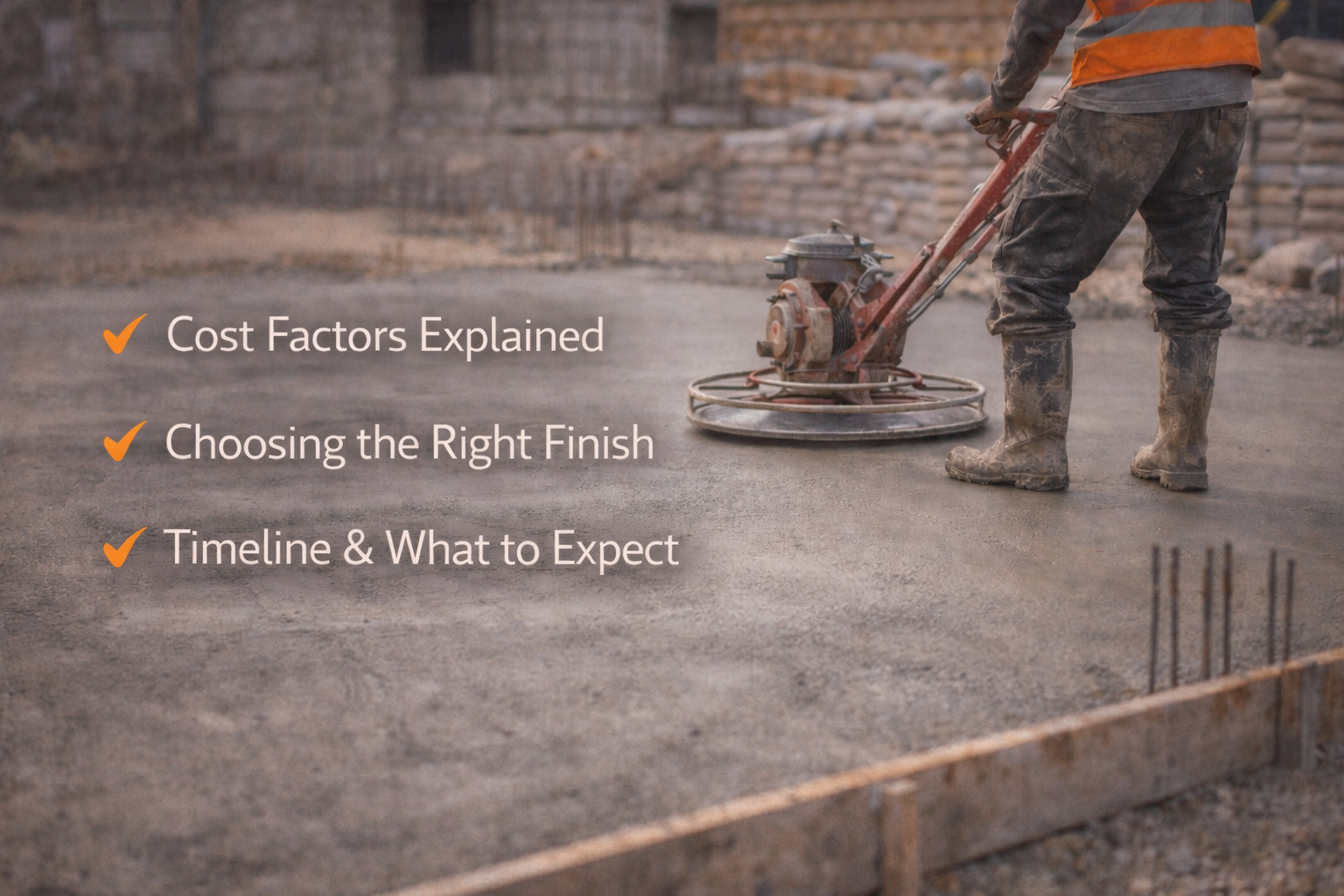
Installing a Concrete floor is a practical choice for many homes and commercial spaces. Concrete floors are durable, versatile, and capable of delivering both a clean industrial look and a polished modern finish. Still, many people start the process with questions about cost, finish options, and what actually happens during installation.
This guide explains how concrete floor installation works, what affects pricing, the finishes available, and what you should expect before, during, and after the pour. It is written to help you make informed decisions and avoid surprises.
Concrete floors are known for their strength and long lifespan. When installed correctly, they can handle heavy foot traffic, machinery, and furniture without damage.
They are also low maintenance compared to many other flooring options. With the right finish, a concrete floor resists stains, moisture, and wear, making it suitable for kitchens, garages, basements, warehouses, and retail spaces.
Another advantage is flexibility. Concrete floors can be finished in many ways to match different styles and budgets.
The cost of installing a concrete floor varies depending on several factors. There is no single price that fits every project, but understanding what influences cost helps with planning.
Key cost factors include floor size, thickness, preparation work, and the type of finish selected. Simple concrete floors cost less than decorative or polished finishes that require extra labour and materials.
Access to the site also affects cost. Tight spaces, upper floors, or long distances from the delivery point may require concrete pumping rather than direct pouring.
This is the most basic finish and is often used in garages, storage areas, and industrial spaces. It provides a clean, level surface that is ready for sealing or coating.
Polished concrete floors are popular in modern homes and commercial interiors. The surface is ground and polished to achieve a smooth, glossy appearance. This finish is durable and easy to clean.
Colour can be added to concrete floors using pigments or stains. This allows for a customised look while keeping the strength of concrete underneath.
Textured finishes are often used where slip resistance is important, such as workshops or commercial entrances.
Each finish has different costs and maintenance requirements, so it is important to match the finish to how the space will be used.
The installation process starts with proper preparation. This includes removing existing flooring, levelling the ground, and installing a sub-base if required. Good preparation prevents cracking and uneven surfaces.
Once the area is ready, the concrete floor is poured. For larger areas or restricted access sites, concrete pumping ensures accurate and consistent placement.
Quick Concrete Pumping supports concrete floor installations by delivering concrete efficiently and placing it precisely where needed. Our experience helps maintain a smooth workflow and reduces disruption on site.
After pouring, the concrete is levelled and finished according to the chosen style. Curing is critical and usually takes several days. Proper curing improves strength and reduces surface defects.
Most concrete floors can be poured in a single day, depending on size. However, curing and finishing extend the overall timeline.
Basic floors may be ready for light use within a few days, while polished or decorative floors take longer due to additional processing. Planning for curing time is essential to avoid damage.
One common mistake is rushing the preparation stage. Poor groundwork leads to cracks and uneven finishes.
Another mistake is choosing a finish that does not suit the space. For example, highly polished floors may not be ideal in areas that need extra grip.
Working with experienced professionals helps avoid these issues and ensures the concrete floor performs as expected.
Concrete pumping plays a key role in many floor installations, especially where access is limited or accuracy is critical.
Pumping allows concrete to be placed evenly without excessive manual handling. This improves finish quality and reduces labour time.
Quick Concrete Pumping provides reliable pumping services for both residential and commercial concrete floors. Our team understands how to handle different mixes and site conditions, helping floors meet quality and durability standards.
Costs vary based on preparation, thickness, and finish. Basic concrete floors are more affordable than polished or decorative options.
With proper installation and maintenance, a concrete floor can last several decades.
In some cases, yes. The condition of the existing surface must be assessed before installation.
Yes. Concrete floors are popular in homes due to their durability, low maintenance, and modern appearance.
Quick Concrete Pumping ensures efficient concrete placement, even in restricted spaces, helping achieve consistent quality and professional results.
A well-installed Concrete floor offers long-term durability, design flexibility, and excellent value. Understanding costs, finish options, and the installation process makes it easier to plan and achieve the result you want.
If you are considering a concrete floor and want reliable guidance or professional concrete pumping support, explore the resources and services offered by Quick Concrete Pumping. Our experience and practical approach can help ensure your concrete floor is installed smoothly and finished to a high standard.
