
A Concrete Slab is one of the most widely used building elements in residential, commercial, and industrial construction. From garden patios and shed bases to house extensions and warehouse floors, concrete slabs provide a strong, level, and long-lasting foundation for countless projects. Yet many people start planning a build without fully understanding slab thickness, costs, […]
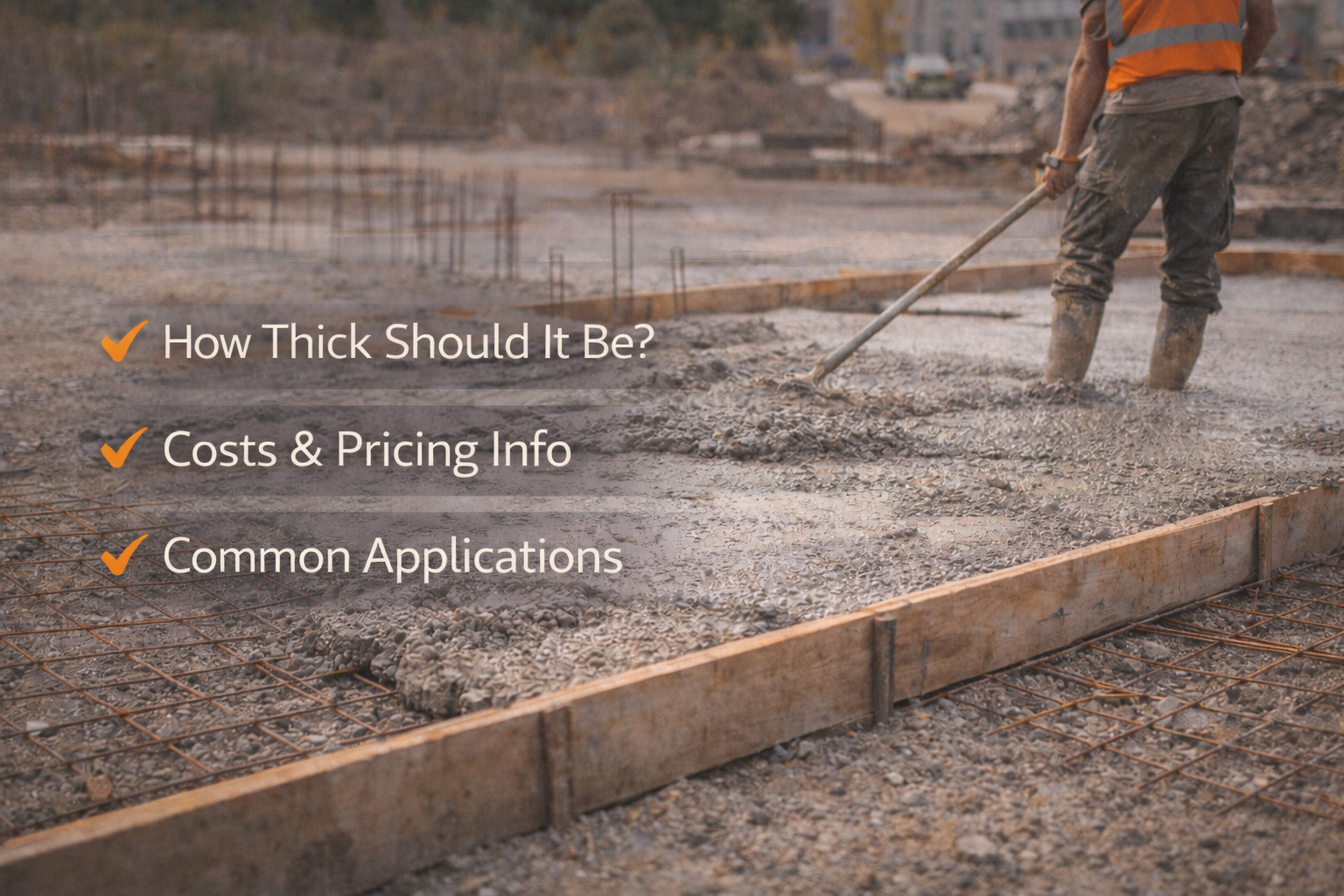
A Concrete Slab is one of the most widely used building elements in residential, commercial, and industrial construction. From garden patios and shed bases to house extensions and warehouse floors, concrete slabs provide a strong, level, and long-lasting foundation for countless projects. Yet many people start planning a build without fully understanding slab thickness, costs, or what type of slab their project actually needs.
This guide is written for homeowners, tradespeople, and developers who want clear, practical information before pouring concrete. You will learn how concrete slabs work, how thick they should be for different uses, what affects the overall cost, and how experienced suppliers and pump operators play a key role in getting the job done right the first time.
A concrete slab is a flat, horizontal surface made from poured concrete. Once placed and cured, it forms a solid base that can support structures, vehicles, or foot traffic depending on its design.
Slabs are typically poured over a prepared sub-base and may include steel reinforcement for added strength. The exact design depends on how the slab will be used and the loads it needs to support.
Concrete slabs are extremely versatile and can be adapted to many applications.
They are often used for shed bases, garden rooms, patios, garages, and driveways. In residential construction, slabs also support extensions, conservatories, and internal floors.
On commercial and industrial sites, concrete slabs are used for warehouses, workshops, retail units, and loading areas where strength and durability are essential.
Choosing the correct slab thickness is one of the most important decisions in any concrete project.
For light-use areas such as garden sheds or patios, a concrete slab thickness of around 100mm is often sufficient when supported by a well-compacted sub-base.
Driveways and garages usually require a thickness of 150mm or more, especially if vehicles will be parked regularly.
Commercial slabs and structural foundations may need 200mm or greater, often combined with steel reinforcement to handle heavier loads. An experienced concrete supplier or pump hire specialist can help assess the correct thickness based on ground conditions and intended use.
The cost of a concrete slab depends on several key factors.
Size and thickness are the biggest cost drivers, as more concrete is required for larger or deeper slabs. The type of concrete mix also affects price, particularly if higher strength or specialist mixes are needed.
Ground preparation plays a major role. Poor ground conditions may require additional excavation, sub-base material, or reinforcement.
Access is another factor. Difficult access can increase labour time unless concrete pump hire is used to deliver concrete efficiently to the pour location.
Concrete pumping allows concrete to be placed quickly and accurately, even in hard-to-reach areas. This is especially useful for rear gardens, tight urban spaces, and sites with limited vehicle access. Using a concrete pump helps maintain a consistent flow, reduces mess, and improves overall slab quality. It also speeds up the pour, which is important for achieving an even finish.
Quick Concrete Pumping regularly supports concrete slab projects by working alongside ready-mixed and mix-on-site deliveries. Our experienced operators ensure concrete is placed exactly where it is needed, helping slabs cure evenly and perform as expected.
A strong concrete slab starts below the surface.
Proper excavation and a compacted sub-base are essential to prevent movement and cracking over time. In many cases, a layer of hardcore followed by sand or blinding material is used.
Steel reinforcement, such as mesh or rebar, is often added to improve load-bearing capacity and control cracking. This is especially important for driveways, garages, and structural slabs.
Once poured, a concrete slab needs time to cure properly. Curing allows the concrete to gain strength gradually and reduces the risk of surface defects.
Finishing options depend on how the slab will be used. Some slabs are left with a brushed finish for slip resistance, while others may be power floated for a smooth surface or prepared for flooring materials.
Avoid heavy use until the slab has fully cured, which typically takes several weeks depending on conditions.
Concrete slabs leave little room for error. Incorrect thickness, poor placement, or rushed finishing can lead to cracking and long-term problems.
Working with experienced professionals helps avoid these issues. From selecting the right mix to placing concrete efficiently, expert input improves durability and performance.
Quick Concrete Pumping is trusted for its practical knowledge, modern equipment, and commitment to safe, controlled pours that support high-quality slab construction.
Most shed bases work well with a slab thickness of around 100mm when built on a solid sub-base.
Minor cracking can occur, but proper preparation, reinforcement, and curing greatly reduce the risk.
Not always, but concrete pumping can make placement faster and cleaner, especially in restricted access areas.
Initial setting happens within a day, but full curing usually takes around 28 days.
A Concrete Slab is a major investment in any building project, whether it supports a small garden structure or a large commercial space. Understanding slab thickness, realistic costs, and proper installation methods helps ensure the finished result lasts for years without issues.
If you are planning a concrete slab and want reliable guidance or professional concrete pumping support, exploring the services and resources available from Quick Concrete Pumping is a smart next step. Our experience, local coverage, and practical approach make us a dependable partner for projects where quality and efficiency matter.
