
Getting the right sand and cement mix is one of those small details that makes a huge difference in construction. Whether you are laying a slab, plastering a wall, or working on a driveway, the strength, durability, and finish of your project all depend on using the correct ratio. Too much cement can cause cracking. […]
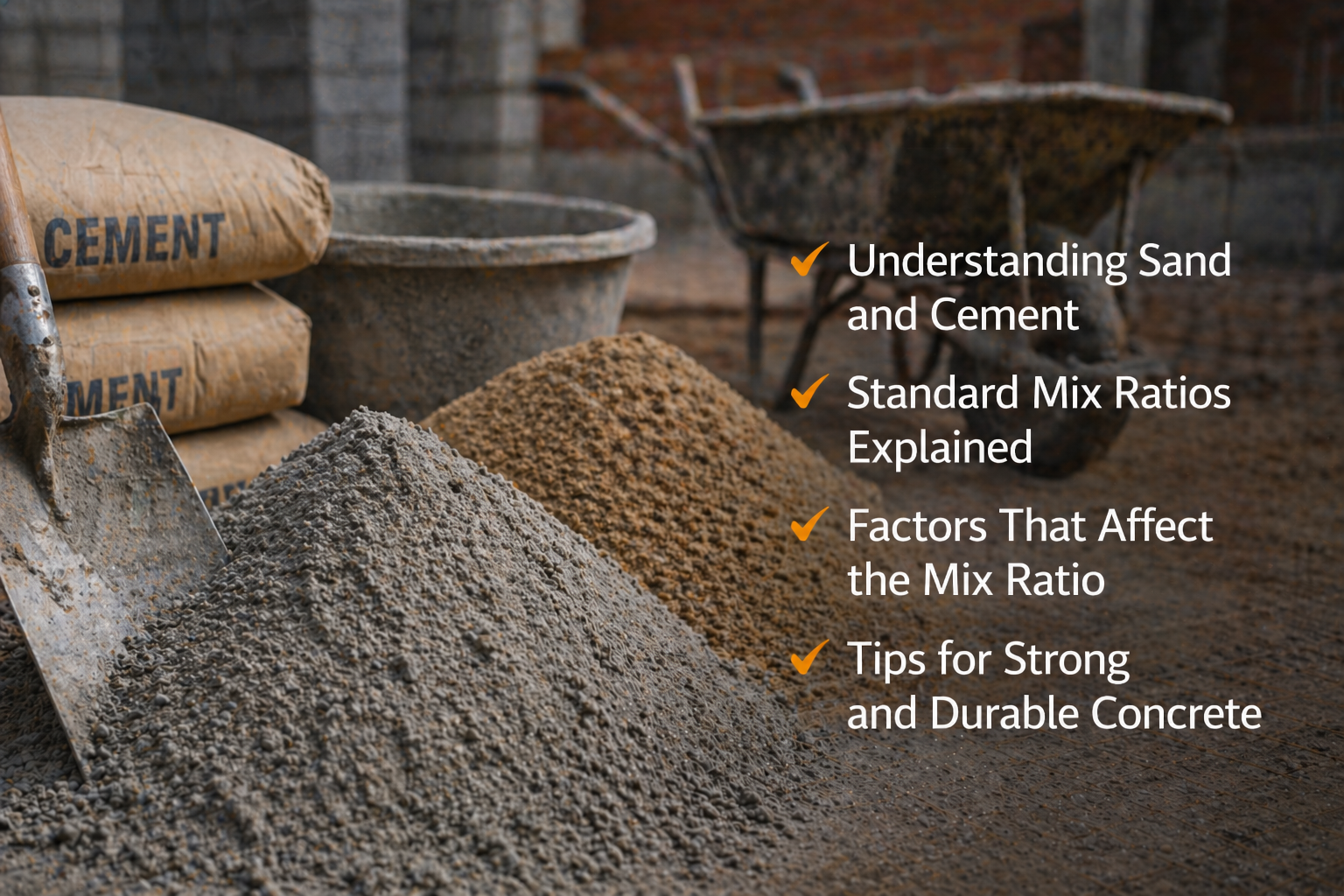
Getting the right sand and cement mix is one of those small details that makes a huge difference in construction. Whether you are laying a slab, plastering a wall, or working on a driveway, the strength, durability, and finish of your project all depend on using the correct ratio.
Too much cement can cause cracking. Too much sand weakens the structure. The balance matters more than most people realise.
In this guide, you will learn the correct sand and cement mix ratios for different applications, how to measure them properly, and practical tips that professionals use to get consistent results every time.
A sand and cement mix is a combination of cement, sand, and water used to create mortar or concrete for building and construction.
The ratio you choose determines the strength and purpose of the mix.
Using the right sand and cement mix ratio is not just about following rules. It directly affects:
For example, a weak mix for a driveway will fail quickly under pressure, while a mix that is too strong for plastering can lead to cracks.
Here are the most commonly used ratios and where they work best:
| Application | Cement : Sand Ratio |
| General mortar | 1:5 |
| Bricklaying | 1:4 to 1:5 |
| Plastering | 1:3 to 1:4 |
| Concrete | 1:2:4 (cement:sand:aggregate) |
These are industry-standard starting points, but real-world conditions can require slight adjustments.
When working on a slab, strength is the top priority.
A typical sand and cement mix ratio for a slab is:
This mix creates strong, durable concrete suitable for:
Always include aggregate, such as gravel, when mixing for slabs. Sand and cement alone are not enough for structural strength.
If you are working on a larger project, companies like Quick Concrete Pumping can supply ready-mixed concrete that removes guesswork and ensures consistency across the entire slab.
Driveways take constant load from vehicles, so the mix must be strong and long-lasting.
A reliable sand and cement mix for a driveway is:
For heavier vehicles, go with a stronger mix like 1:2:4.
Proper base preparation is just as important as the mix. Even the best mix will fail if the foundation is weak.
Plastering requires a smoother, more workable mix.
The standard sand and cement mix ratio for plastering is:
This ensures:
Using a mix that is too strong can cause shrinkage cracks on walls. Always stick to recommended ratios.
Consistency is key. Guesswork leads to poor results.
Here are simple ways to measure:
Add water gradually. The mix should be workable, not too wet or too dry. A sloppy mix weakens the final structure.
A sand and cement mix ratio calculator helps you estimate how much material you need for your project.
To calculate manually:
For example, for a 1:5 mix:
For larger or more complex jobs, using professional services like Quick Concrete Pumping ensures accurate batching and eliminates costly errors.
From years of hands-on experience, here are practical tips that make a difference:
These small details often separate a solid job from one that fails early.
Mixing on-site works well for small projects, but larger jobs need consistency, speed, and precision.
Quick Concrete Pumping provides:
We serve commercial, trade, and domestic customers across Kent and Surrey, including areas like Croydon, Bromley, Guildford, Kingston Upon Thames, Tunbridge Wells, and Westminster.
Working with experienced providers helps you avoid waste, delays, and structural issues.
It depends on the job. For general use, 1:5 is common. For plastering, 1:3 or 1:4 works best, while slabs typically require 1:2:4.
No. Structural concrete requires aggregate like gravel for strength. Sand and cement alone are not sufficient.
Add water gradually until the mix is workable but not runny. Too much water weakens the structure.
A poor mix ratio can lead to cracking, weak structures, and early failure of the project.
For larger projects, yes. It ensures consistency, saves time, and reduces errors.
Getting the sand and cement mix right is not complicated, but it requires attention to detail. The correct ratio ensures strength, durability, and a professional finish, whether you are working on a slab, driveway, or plastering job.
While small projects can be handled with careful measuring and mixing, larger or more demanding jobs benefit from expert support. That is where experienced providers like Quick Concrete Pumping come in, offering reliable solutions that take the stress out of the process.
If you want consistent results and peace of mind on your next project, it is worth exploring professional guidance or ready-mixed options from trusted experts like Quick Concrete Pumping.
