
If you are planning to upgrade your driveway, gravel is one of the most practical and cost-effective options available in the UK. It offers a clean, natural look, drains well in wet weather, and is far more affordable than alternatives like block paving or concrete. But one question always comes up first. How much does […]
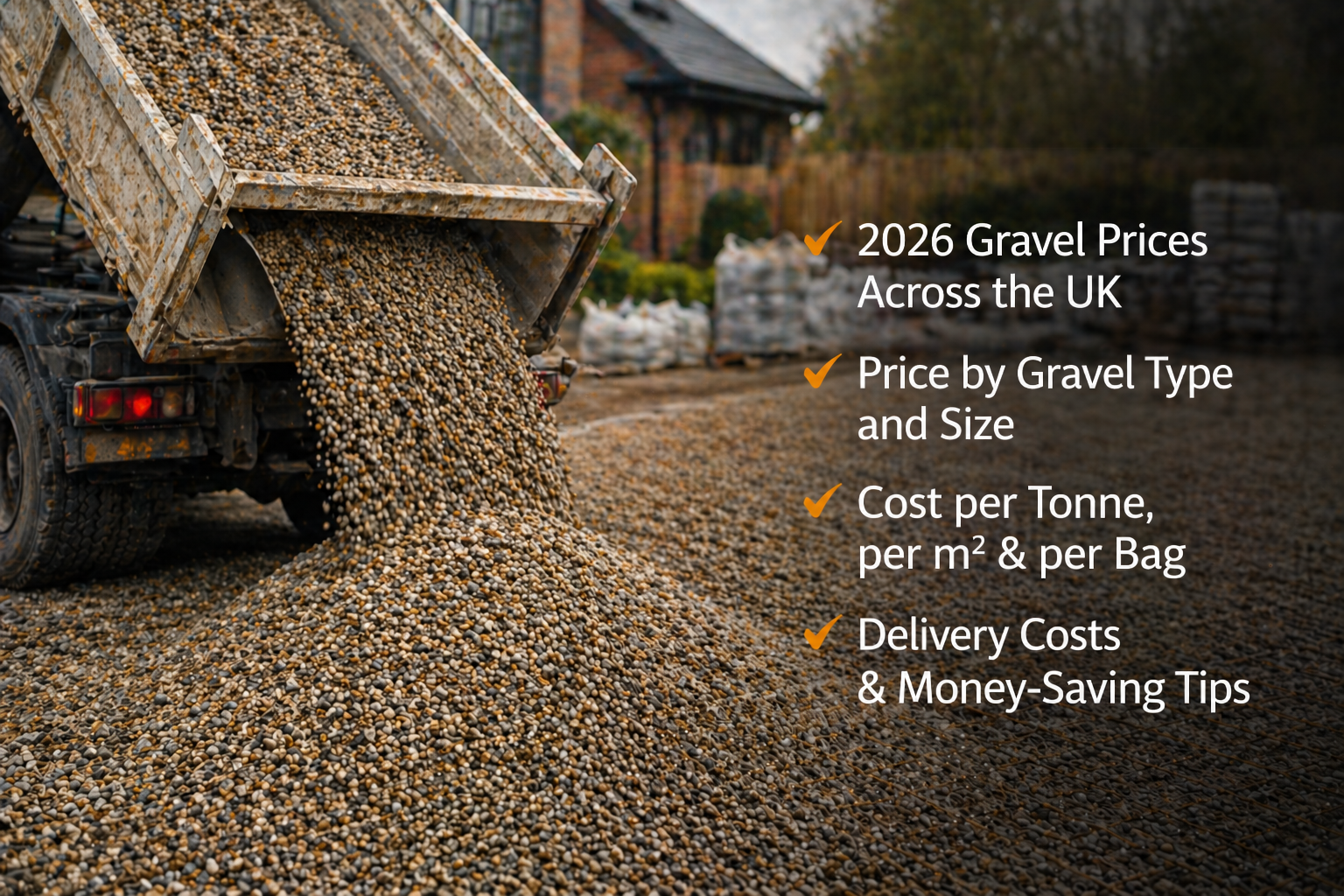
If you are planning to upgrade your driveway, gravel is one of the most practical and cost-effective options available in the UK. It offers a clean, natural look, drains well in wet weather, and is far more affordable than alternatives like block paving or concrete.
But one question always comes up first. How much does Driveway Gravel actually cost in 2026?
The answer depends on several factors, such as the type of gravel, the size of your driveway, ground preparation, and labour costs. In this detailed guide, you will get a clear breakdown of pricing, what affects the cost, and how to budget properly for your project.
If you are working on a small residential driveway or a larger installation, this guide will help you make informed decisions and avoid unexpected expenses.
The cost of Driveway Gravel in the UK typically falls within these ranges:
For a standard driveway measuring 50m², you can expect:
These figures are averages and can vary depending on location and site conditions.
Understanding what drives the cost helps you plan better and avoid overspending.
Different types of gravel come at different price points:
The larger the area, the more materials and labour required. Costs increase proportionally with size.
A typical driveway needs a depth of 40mm to 60mm for the top layer, plus a sub-base underneath. Deeper layers mean more gravel and higher costs.
Preparation is often the most overlooked cost.
This includes:
Poor preparation leads to sinking and uneven surfaces over time.
Labour rates vary across the UK. London and the surrounding areas tend to be more expensive than other regions.
Here is a simple breakdown to help you understand where your money goes:
Choosing the right gravel is not just about price. It also affects durability and appearance.
Yes, gravel is generally the cheapest driveway option.
However, gravel may require occasional topping up and maintenance.
For homeowners looking for a more permanent solution, concrete can be a better long-term investment. This is where experienced providers like Quick Concrete Pumping come in, offering reliable concrete solutions for durable driveways.
Here are practical ways to reduce costs without compromising quality:
Yes, a solid sub-base is essential.
A typical structure includes:
Skipping the sub-base may save money upfront, but leads to long-term problems such as sinking and poor drainage.
Gravel driveways are low-maintenance but not maintenance-free.
Typical ongoing costs include:
These costs are relatively low compared to repairing damaged concrete or block paving.
If you’re considering a gravel driveway solution, Quick Concrete Pumping supports projects across Kent and Surrey.
Brighton, Brixton, Bromley, Chiswick, Chelsea and Kensington, Clapham, Crawley, Croydon, Dorking, Ealing, East London in selected areas, Epsom, Guildford, Godalming, Hammersmith and Fulham, Horsham, Islington, Kingston Upon Thames, Leatherhead, Mitcham, Redhill, Reigate, Richmond, Sutton, Streatham, Tooting, Tunbridge Wells, Wandsworth, West London, and Westminster.
Our experience across both residential and commercial projects makes us a reliable option for high-quality driveway installations.
You will need about 1 tonne of gravel for every 10 to 15 square metres at a standard depth.
Crushed stone is usually the most affordable and practical option.
With proper maintenance, a gravel driveway can last over 10 years.
Gravel naturally drains well, but a proper base improves performance and prevents water pooling.
Yes, but proper preparation is key. Poor installation can lead to uneven surfaces and higher long-term costs.
Gravel remains one of the most cost-effective ways to build or upgrade a driveway in the UK. It offers flexibility, natural drainage, and a lower upfront cost compared to other materials.
That said, the true cost of a Driveway Gravel project goes beyond just the price per tonne. Ground preparation, installation quality, and long-term maintenance all play a role in the final outcome.
If you are working with a tight budget, gravel is a smart choice. For expert advice, reliable materials, and professional support, Quick Concrete Pumping is a trusted choice across Kent, Surrey, and surrounding areas. Whether you need guidance on driveway solutions or high-quality concrete services, our team can help you get the job done right from the start.
If you are planning your project, consider reaching out or exploring their services to find the best solution for your needs.
